

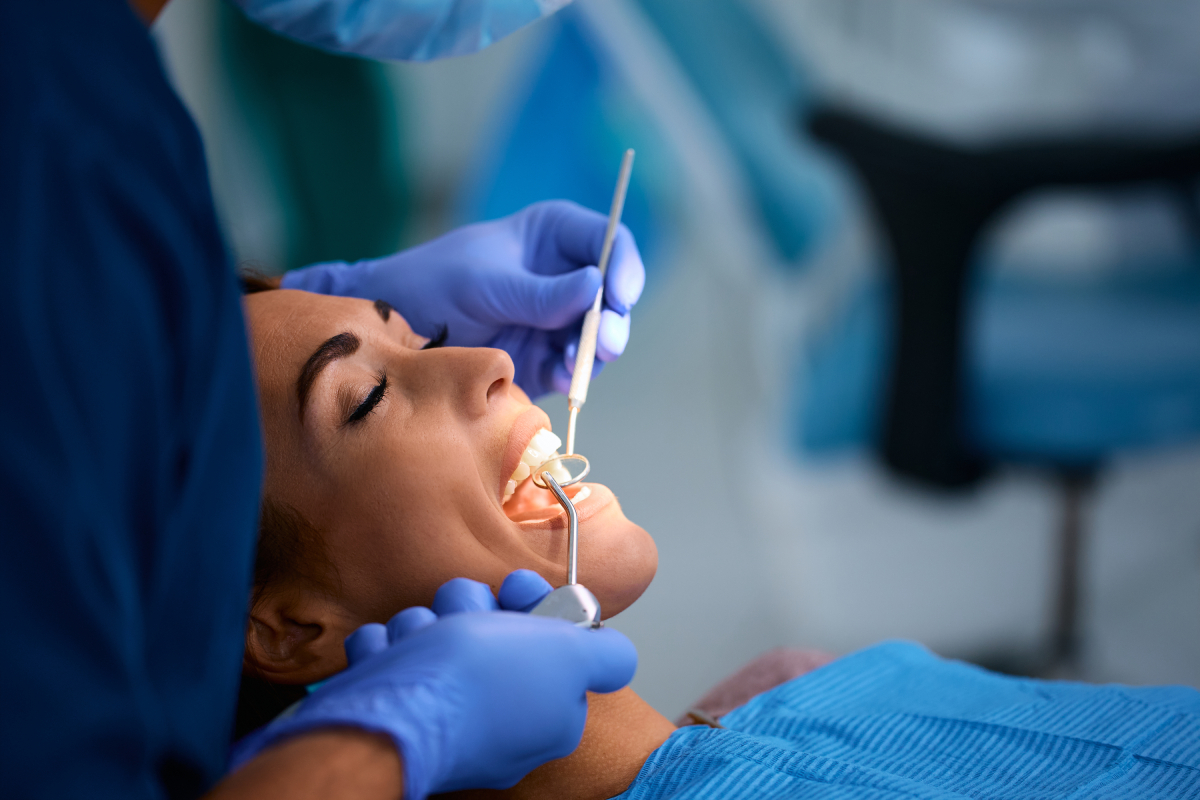
A strange metallic taste can be an unexpected part of recovering from implant surgery. You may notice it when you drink water, eat, or simply swallow. It can be annoying, but it does not automatically mean something is wrong with the implant.
In many cases, the taste comes from normal changes taking place while your mouth heals. Minor bleeding, medications, dry mouth, and changes around the surgical area can all affect how things taste.
Why Does Your Mouth Taste Metallic?
Small amounts of blood can mix with saliva during the early healing period. Blood contains iron, which can create a noticeable metallic or slightly bitter taste even when you are not experiencing significant bleeding.
Medications can also change your sense of taste. Some antibiotics, pain medications, and antimicrobial rinses may leave an unusual aftertaste. If your mouth becomes dry during recovery, the sensation may become even more noticeable because there is less saliva to wash away food particles and bacteria.
The implant itself is not usually the direct cause. Titanium is generally well tolerated by the body, and the temporary taste change is more often connected with the healing environment around it.
What Can You Do to Reduce the Taste?
A few simple habits can make recovery more comfortable.
Drink Plenty of Water
Keep water nearby and take regular sips throughout the day. Staying hydrated helps prevent dry mouth and can reduce the lingering taste.
Follow Your Cleaning Instructions
Continue caring for your mouth exactly as your dental team recommends. Do not aggressively brush or disturb the surgical area before you have been told it is safe to do so.
If you need help understanding your aftercare instructions, your dental care team can explain what is appropriate for your stage of healing.
Pay Attention to Your Medications
If the taste appeared after starting a new medication, it may be contributing to the problem. Do not stop a prescribed medication on your own. Instead, ask your dental or medical provider whether the medication could be affecting your taste.
Give Your Mouth Time
A metallic taste often fades as the tissues heal and your mouth returns to its normal routine. You may notice the sensation less frequently before it disappears completely.
When Should You Call Your Dentist?
A mild metallic taste that gradually improves is usually less concerning than one that becomes stronger or continues without improvement.
Contact your dental office if the taste comes with increasing pain, swelling, persistent bleeding, pus or discharge, fever, worsening bad breath, or an implant that feels loose. If you have concerns about your dental implant treatment or recovery, it is best to have them evaluated rather than waiting for symptoms to worsen.
An oral health specialist can also determine whether the sensation is related to healing, medication, oral hygiene, or another issue that needs attention.
Know When a Strange Taste Needs Attention
Most temporary taste changes improve as your mouth heals. Keep yourself hydrated, follow your aftercare instructions, and pay attention to symptoms that are getting worse instead of better.
If you have questions about your recovery, Smiles of Punta Gorda is here to help. If you are in Punta Gorda, find the office here and schedule an appointment for personalized guidance.
Frequently Asked Questions
1. How long does a metallic taste last after implants?
There is no exact timeline for everyone. It often improves as the surgical area heals and any medication related taste changes resolve.
2. Is a metallic taste a sign that my implant is failing?
Not necessarily. A temporary metallic taste by itself does not mean the implant is failing. Other symptoms, such as increasing pain, swelling, discharge, or looseness, are more important reasons to seek an evaluation.
3. Can I brush my teeth after implant surgery?
Usually, yes, but you need to follow the specific instructions you received. Your dental team may recommend avoiding direct brushing over the surgical site during the earliest stage of healing.
4. Should I stop taking my medication if it causes a metallic taste?
No. Talk with your prescribing provider first. They can determine whether the medication is responsible and whether a change is appropriate.


Visit Smiles of Punta Gorda
We can see you as soon as tomorrow!