

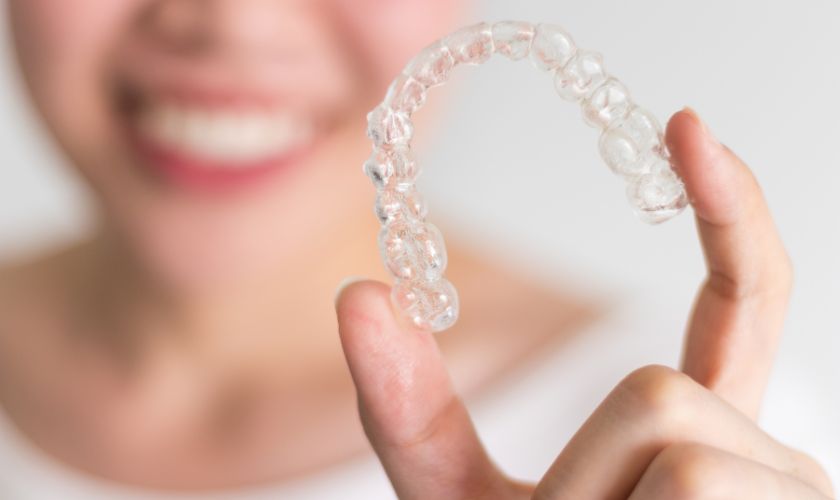
In the realm of orthodontic treatment, Invisalign has emerged as a revolutionary solution, offering a discreet and comfortable alternative to traditional braces. At the heart of Invisalign’s effectiveness lie its attachments – small, tooth-colored dots strategically placed on the teeth to enhance the treatment process. Let’s delve into the key insights into Invisalign attachments and their pivotal role in transforming smiles.
Understanding Invisalign Attachments
Invisalign attachments, often referred to as buttons or bumps, are tiny, tooth-colored shapes made from a composite material. They are customized for each patient and placed on specific teeth to facilitate controlled movement during treatment. These attachments act as anchors for the aligner trays, providing additional leverage and precision in guiding the teeth into their desired positions.
The Role of Attachments in Treatment
Enhanced Precision: Invisalign attachments play a crucial role in ensuring precise tooth movements. By providing additional grip and control, they help direct the forces exerted by the aligners, leading to more accurate and predictable results.
Facilitating Complex Movements: Certain orthodontic corrections, such as rotations, intrusions, and extrusions, require precise and targeted forces. Invisalign attachments enable orthodontists to address these complex movements effectively, expanding the scope of treatable cases.
Improving Predictability: With the aid of attachments, orthodontists can better control the direction and magnitude of tooth movements. This enhances the predictability of treatment outcomes, allowing patients to visualize their progress and anticipate the final results more accurately.
Customized Treatment: Each set of attachments is strategically placed based on the patient’s unique treatment plan and dental anatomy. Orthodontists meticulously design the location and size of attachments to achieve optimal results tailored to the individual’s needs.
Addressing Challenging Cases: Invisalign attachments have revolutionized the treatment of complex orthodontic issues. From mild to severe misalignments, attachments enable orthodontists to tackle a wide range of cases that were once considered difficult to manage with clear aligner therapy alone.
The Attachment Process
The process of incorporating Invisalign attachments into treatment typically involves several steps:
Consultation and Treatment Planning: During the initial consultation, your orthodontist will assess your dental condition and discuss your treatment goals. Based on this evaluation, a customized treatment plan will be developed, which may include the placement of attachments.
Attachment Placement: In a subsequent appointment, the attachments will be bonded to the surface of the teeth using dental adhesive. The placement of attachments is precise and minimally invasive, ensuring optimal functionality without compromising aesthetics.
Aligner Wear: Once the attachments are in place, you will continue wearing your Invisalign aligners as prescribed by your orthodontist. The attachments work in conjunction with the aligners to gradually shift your teeth into alignment over time.
Conclusion:
Invisalign attachments represent a pivotal advancement in orthodontic technology, revolutionizing the way we approach teeth straightening. By understanding their role and significance in treatment, patients can embark on their Invisalign journey with confidence, knowing that every aspect of their smile transformation is carefully orchestrated for optimal results. With the power of attachments, Invisalign offers not just straighter teeth, but also enhanced precision, predictability, and ultimately, a smile that radiates confidence and beauty.



Visit Smiles of Punta Gorda
We can see you as soon as tomorrow!