

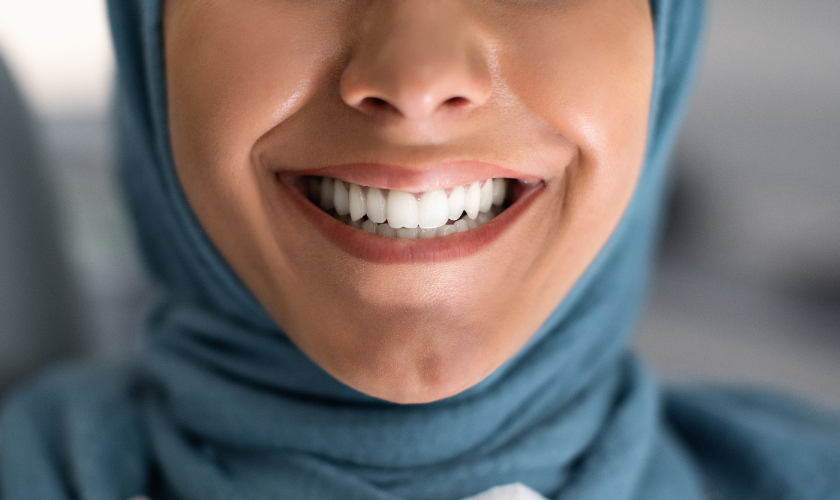
A bright, white smile is often associated with health, youth, and beauty. Unfortunately, many factors can cause teeth to become stained or discolored, including aging, certain medications, and lifestyle habits like smoking or drinking coffee or wine. Luckily, there are many teeth whitening options available that can help you achieve a brighter, more confident smile. In this blog, we’ll explore the benefits of teeth whitening and the different options available.
What Are the Benefits of Teeth Whitening?
Teeth whitening is a cosmetic dental procedure that involves removing stains and discoloration from the teeth to improve their appearance. The procedure involves applying a whitening solution to the teeth, which typically contains hydrogen peroxide or carbamide peroxide, and using a special light or laser to activate the solution. The process can be done in-office by a dentist or at home using custom-made trays or over-the-counter products. Teeth whitening can effectively remove surface stains caused by food, drinks, smoking, and aging, resulting in a brighter and more confident smile.
What Are the Different Teeth Whitening Options Available?
In-office whitening:
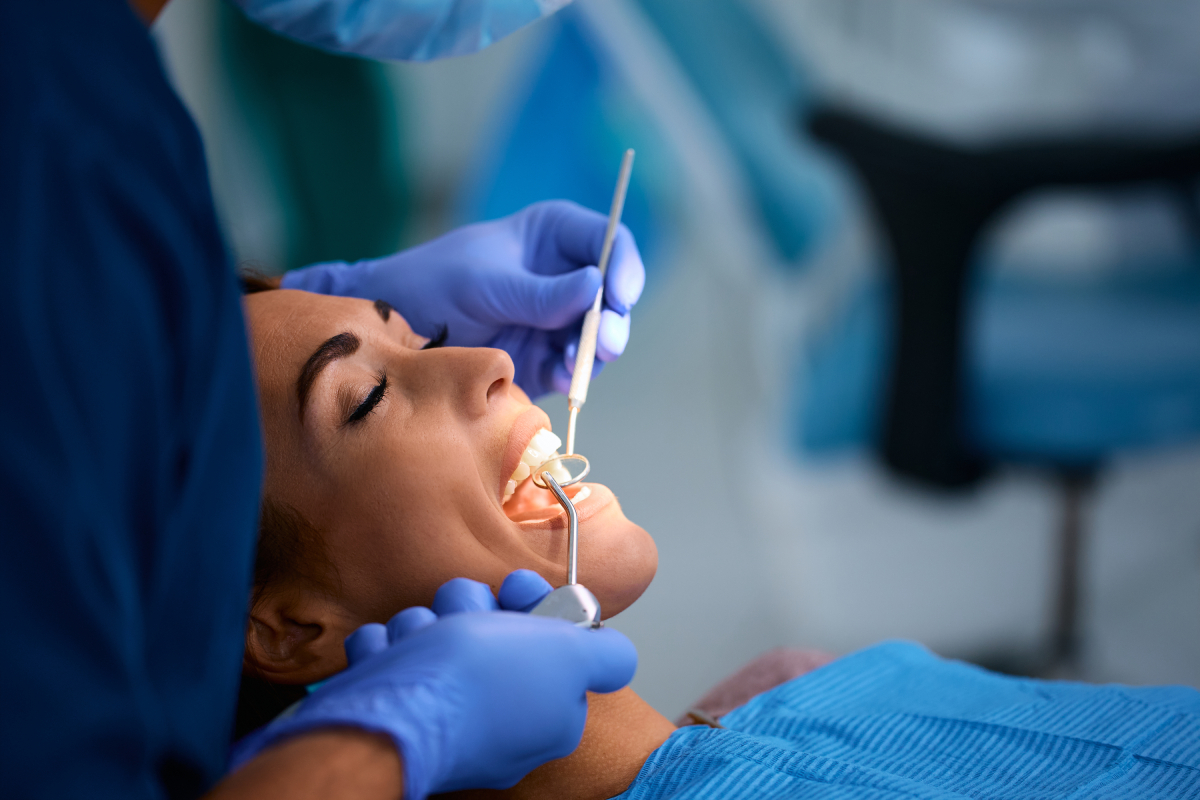
This involves a professional whitening treatment performed by a dentist or dental hygienist. The treatment typically takes about an hour and can lighten teeth in several shades.
Take-home whitening kits:
These are custom-made trays that fit over your teeth and are filled with a whitening gel. You wear the trays for a specified amount of time each day for several days or weeks, depending on the desired level of whitening.
Over-the-counter whitening products:
These include whitening toothpaste, strips, and gels that can be purchased at drugstores. They are less effective than professional whitening treatments but can still lighten teeth to some degree.
Source – American Dental Association (ADA)
Process Of Professional Teeth Whitening
Initial examination:
The dentist will examine your teeth to assess their condition and determine whether you are a suitable candidate for teeth whitening.
Teeth cleaning:
The teeth are cleaned thoroughly to remove any plaque or debris that could interfere with the whitening process.
Application of whitening agent:
A whitening agent, usually containing hydrogen peroxide or carbamide peroxide, is applied to the teeth.
Activation of the whitening agent:
The whitening agent is activated using a special light or laser, which helps to break down the stains on the teeth.
Re-application:
The whitening agent may need to be reapplied several times over the course of the treatment session to achieve the desired results.
Evaluation of results:
Once the treatment is complete, the dentist will evaluate the results and determine whether further treatment is necessary.
Follow-up care:
To maintain the results of the whitening treatment, it is important to follow good oral hygiene practices and avoid foods and beverages that can stain the teeth. The dentist may also recommend periodic touch-up treatments to keep the teeth looking their best.
Conclusion:
Teeth whitening can give you a brighter, more confident smile while also improving your oral health and enhancing your appearance. With several options available, including in-office treatments, take-home kits, and over-the-counter products, there is a teeth whitening solution for everyone. Talk to your dentist to determine which option is right for you.
FAQs
Common Questions
Lorem ipsum dolor sit amet, consectetur adipiscing elit. Vestibulum id ligula porta felis euismod semper. Morbi leo risus, porta ac consectetur ac, vestibulum at eros.
FAQs
The duration of teeth whitening results varies depending on the individual and the type of treatment. In-office whitening treatments typically last the longest, up to a year or more, while take-home kits and over-the-counter products may need to be used more frequently to maintain results.
When performed correctly, teeth whitening does not damage enamel. However, overuse or improper use of whitening products can cause enamel erosion and tooth sensitivity.
To maintain your whitened teeth, it’s important to practice good oral hygiene habits like brushing twice a day, flossing daily, and visiting your dentist for regular cleanings. You should also avoid consuming staining substances like coffee, tea, and wine, and quit smoking if you are a smoker.


Visit Smiles of Punta Gorda
We can see you as soon as tomorrow!